
I lost my soul mate a year ago.
After 12 years of knowing each other, including 5 years of intense romance and the deepest intimacy I’ve ever experienced with another person, he died of cancer.
What followed for me has been a mixture of shock, regret, devastation, suicidal depression, loss of friendships, and ever more desperate search for meaning.
Now, exactly one year on, I want to reflect on what has been in the working through this extremely difficult period.
My late husband, let’s call him C, was a highly gifted psychotherapist / personal development coach, who worked with a lot of gifted clients. As I struggled for a long time to embrace my own giftedness, he was always my rock reminding me of it and of how I could live a fulfilling life by learning to recognise and work with the rewards and challenges that come with it.
So, what may be unique in the journey of a gifted adult grieving another gifted adult?
1. I no longer worried about being ‘too much’ for people
After C died, tears were pouring out of me like waterfalls on a daily basis. For the best part of one year, I burst into tears every time I uttered the words ‘My husband died last (week/month/recently…)’ to somebody. Where historically part of me always scanned for signs of overwhelm or disapproval from the recipient, this time I no longer cared. This is my pain. Deal with it. Walk away if you cannot handle it. P*ss off if you judge my vulnerability because you never learnt how to deal with your own.
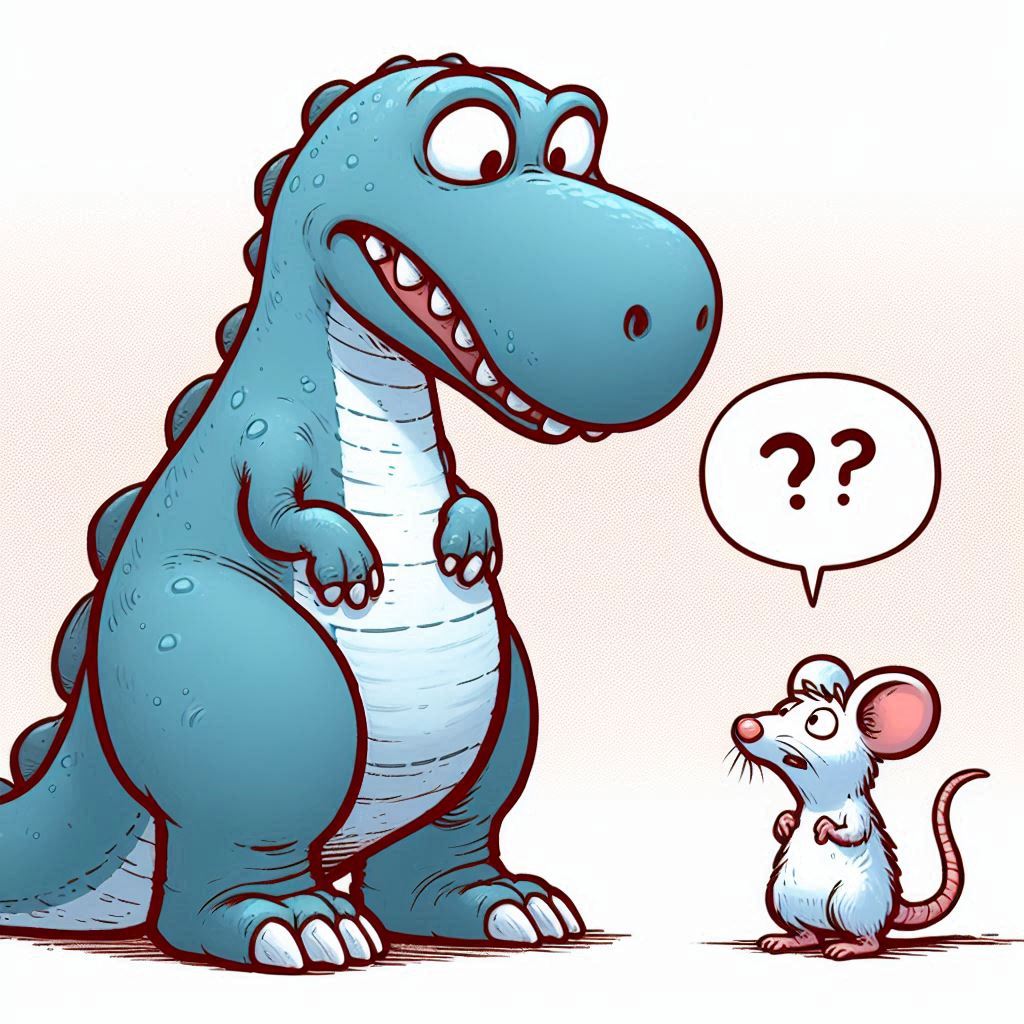
I’ve been told that I ‘think too much’ all my life. Maybe what they really meant was that I ‘feel too much’. Or perhaps both. Either notion is absurd. How can one be too much if one simply ‘is’ a certain way? What they meant was that I was ‘too much’ for them. Too intellectual for them to understand. Too complex for them to process. Too intense for them to feel safe in emotional detachment. Too clear-eyed for them to stay in comfortable denial.
Since the worst thing has already happened in my life, it seemed pointless to adapt myself merely to protect others from their fears. If life was still worth living at all, I am going to embrace every authentic quality of mine. Know myself to the bone before I die.
So I took a lot more risks with self-exposure. Meeting up with an ex-boyfriend. Speaking about my loneliness and longing for empathy in front of a group. Playing the piano in public. Writing my first song in memory of C and putting it online. It may not always appear much to others, but these are very bold moves for me. What is life without taking risks to know oneself?
2. I muffled my internalised critic/mother
Because I knew how devastating it was to go through the loss of C, it became easier to muffle any harsh voices carrying unsympathetic messages or criticism. Oh how familiar am I with those voices! It was through them that I learnt to never feel good enough, to be fearful of failure as well as success, to compromise my self-esteem to appease others, to hide my boldness and ambitions, to suppress the possibility of fulfilling my wildest dreams.
However, during the time of deep grief, I allowed myself to recognise how unhelpful and malicious the internalised critic/mother can be. In a way, grief became my strongest protection. I felt able to say (mostly internally) to anybody who dared criticise what I was doing: “How dare you say that to a grieving widow!”, including that inner critic. And it is through this period with the most acute awareness of what matters in life that I learnt how much better it is to live without the inner critic. This newly found freedom may help me unlock more of my potential, even though, to be honest, I would rather have C back and continue to struggle with the inner critic if that’s an option.

A caveat is that it is still not easy to remove those critical voices altogether. Early years of conditioning often has the strongest hold on us. However, now the voices are muffled, it is easier to recognise when a message is unhelpful and false. Such awareness is the key step towards an improved, healthier relationship with ourselves. I still succumb to guilt-tripping, and the pressure and fear of criticism at times (read my recent experience here), but I am a lot more confident in my ability to deflect such criticism and not let it obstruct my path to actualisation.
Almost always, anger is more powerful than apathy. So let it empower you. Prioritise your own sense of integrity over others’ feelings.
3. I finally embraced my creative giftedness
Somewhere, somehow, I learnt that art doesn’t bring enough bread. To some extent, that is true. However, there are people who make a decent living doing art and I always admired them.
Years ago, I dabbled in portrait drawing. I wasn’t bad at it, but it wasn’t enough to make me want to work as an artist. This time, however, feeling that I have nothing to lose any more, I went in seriously with my interest in the piano. Music felt comforting and, at its worse, an effective distraction. As I developed my skill, I felt more of C’s consistent affirmation of my multi-talented-ness over the years, of how he believed in me more than I did myself.
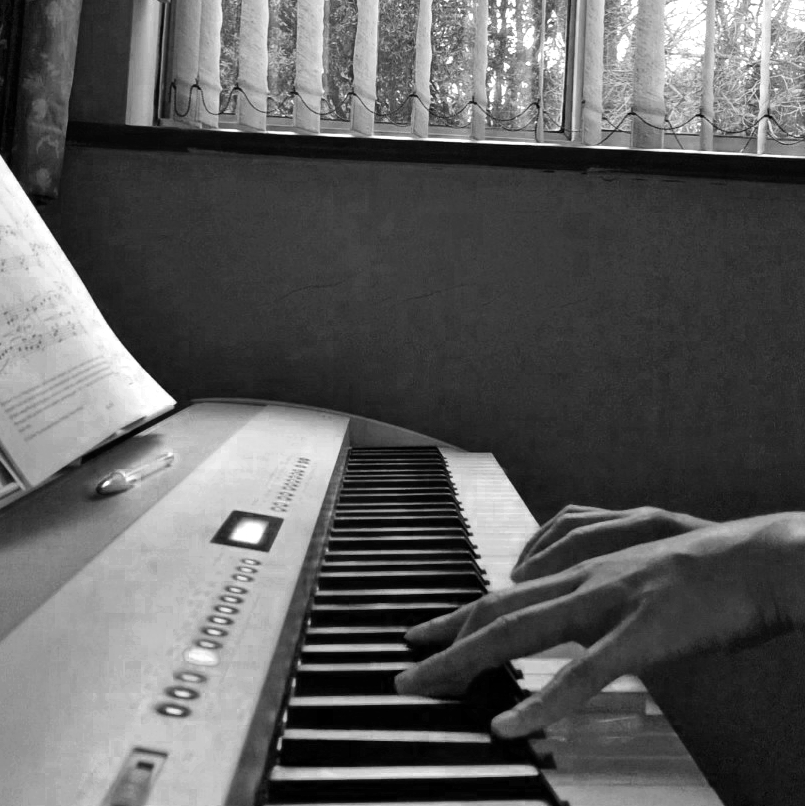
It still feels difficult to be hopeful at times, especially as I’ve recently injured my right hand and am having to take a break from practising. But a lot of the time, I can see that getting gigs is a possibility, as soon as I feel confident enough that I have a big enough repertoire and/or am skilled enough to improvise lovely-sounding music.
4. I became even more disillusioned about life
So far in life, I have been operating under the somewhat unconscious belief that things will get better as life goes on. As I accumulate skills, knowledge, experience, wealth, relationships, etc., life should get easier. Right? All the things that had gone ‘wrong’ before are easier to accept if I believed that they were valuable lessons. The more ‘lessons’ I’ve learnt, the better and more desirable a person I would become. So everything should get easier. Getting jobs, maintaining health, finding mates, living life. I shall become less fearful and more confident in myself and go through the rest of my life with the kind of wisdom that makes me, eventually, almost invincible to pain.
Only that now I am not so sure.
I was cocky about grief. I thought it would be just like all the other hardships I already endured. But no. It’s a lot harder. I realised that loss is much easier to deal with if you didn’t know the full value of what you’d lost. Devastatingly, this time I am acutely aware of the value of what I lost. And it’s truly irreplaceable. I’ll never have that again. (Now typing that ‘out loud’ evokes every urge in me to deny its truth.) Also, until now, my life had been about accumulation, with not much to lose. So to a large extent, things could only get better. But my recent loss reminded me that I do have things to lose now. Things can get worse. I can become less. Less healthy, less desirable, less wealthy, less supported, less hopeful. That is the reality of life.
So if the ultimate euphoria isn’t the end goal, why carry on living at all?
It’s a cliche but the journey really is more important than the destination. Of course, we need to reasonably believe that the destination is enticing in order to go on the journey at all. That’s where Hope comes from.
However, life is a very special kind of journey. It always ends in death. A kind of destination that is typically undesirable if you are enjoying the journey. We all know we are heading there, but we don’t know when we’ll arrive. We are all forced to start this journey, as a result of someone else’s action that is totally independent of our own. Then, as innocent feeble little babies, we have to go on this strange journey without a rulebook, constantly driven by the demands of our bodies, not knowing where we are going, or finally realising where our destination is but totally confused as to why anyone would bother with the journey at all.
So if destination isn’t the point of life, what do we make of the journey? Why does anyone go on a journey if they don’t particularly like the destination? I remember meeting someone years ago who said he liked being ‘on the way’. Writing this on an air-conditioned train right now on a warm summer afternoon, I can appreciate his preference. Predictability may feel safe, but it gets stifling after a while. Especially for gifted people who get bored easily. Journeys expose us to all sorts of risks, but they are exciting. You never know what you will discover or what feelings you will experience. They all reveal something about your true nature.
When it comes to the meaning of life, Einstein says ‘to embrace being part of a whole.‘ Lao Zi says ‘to sit quietly and look within.‘ Victor Frankl says ‘to discover meaning by working, by experiencing something/someone, or by our attitude towards suffering.‘ C says ‘you have a unique contribution to make in the world.‘ Finally, I like Dolly Parton’s ‘Find out who you are and do it on purpose.‘
So, perhaps the point of the journey is to find out who we are through our experiences and encounters (euphotic or devastating), all the while knowing that we are not separate from but part of the Universe, and the fact that everything we need to know is within us.

5. I long for other disillusioned people
Most people shun social isolation, but they forget one thing: socialising takes energy. We all have a ‘socialised self’ and an ‘authentic self’. Of course, there is overlap between the two, but mostly we built our socialised self, through (often) painful trial and error, in order to be accepted or even admired socially. A well built socialised self certainly gives us many advantages as we find our paths in business, job markets, influencing, and finding a mate. However, if no one ever gets to see our authentic self, we’d never feel like anybody really knows us. Imposter syndrome and loneliness prevail.
To maintain the socialised self, we must prioritise what is acceptable to the group we are in, over our authentic expressions. We must carefully observe the social environment and watch out for any unspoken rules among our peers, whilst adjusting our behaviour and censoring our words. This can take an enormous amount of energy.
Since C’s death, I have become highly selective as to who I spend time with. I became more aware than ever that C and I bonded deeply in our disillusionment. More extraordinarily, we bonded in the purest sense of hope that can only arise from disillusioned souls. Gifted people tend to be disillusioned from a young age. Like the freed prisoner in Plato’s Allegory of the Cave, we face the same challenges of pain, disbelief, frustration, and loneliness that come with such rare enlightenment. However, when you do find another disillusioned soul that is just like yours, the sense of hope is enormous: If there is one, there must be more. If another soul just like me is doing fine in life, it must mean I will be fine too. Thank God there is nothing wrong with me.
I also have a carefully curated social self who has brought me much success in my professional life. Over the past year, however, my authentic self took more central stage. I can’t say that it always felt ‘better’ than maintaining a socialised persona. In fact, in some ways it felt lonelier, because I became disillusioned about most of my relationships. I realise how many of them depended on the social self I carefully maintained and how easily they can fall apart at the first sight of my authentic self. Losing C made me realise, more than ever, how valuable an authentic relationship is and how much that fulfills my need for connection. It wasn’t that I didn’t want to see any other friends when I was with C, but having this soul mate already by my side made it a hell lot easier to simply enjoy the other relationships.

Gifted people are intense in their relationships. Sometimes that can overwhelm others who want a simpler life. So having a soul-mating relationship where this intensity is allowed to flow, everything else starts to flow more easily too. Now without C again, I long for other disillusioned, intense people more than ever, as those who are not often serve as a cutting reminder of my loss.
Now What?
Life is not worth living if we don’t test our limits. I intend to live a life with no regrets. Fulfilling my potential as much as possible and loving the process. If life doesn’t have any inherent meaning, if life is full of repeating cycles of loving followed by losing what you love, then you might as well fill it with things you love, have a blast while it lasts, then go out with a bang!
Thank you for reading.

 Ellen Tang Coaching